Dental Orthodontics Near Me: Expert Guide to Options
This guide helps you find dental orthodontics near me with an objective approach to treatment planning, costs, and how dental implants may fit alongside orthodontics. It explains what to expect from consultations, common orthodontic pathways, insurance and financing considerations, and practical steps for obtaining low-cost dental implants in English-, Spanish-, and Portuguese-speaking countries.
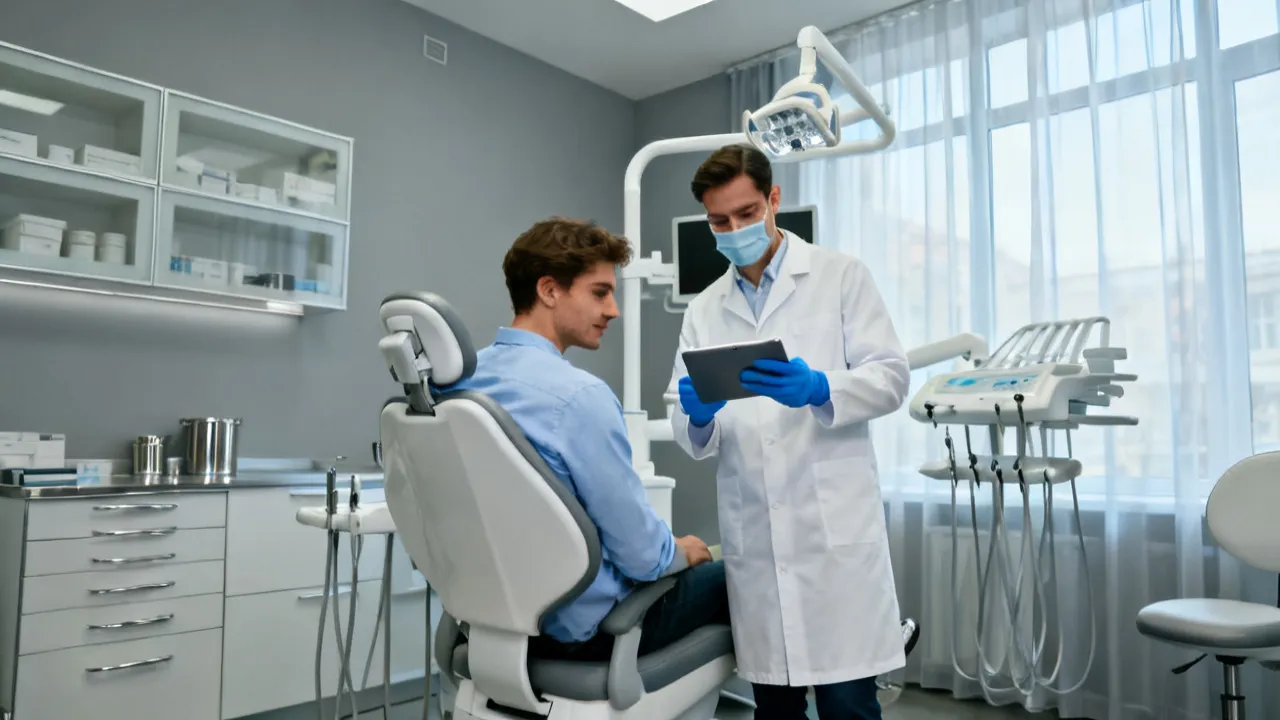
Immediate Guidance: What “Dental Orthodontics Near Me” Should Mean in Practice
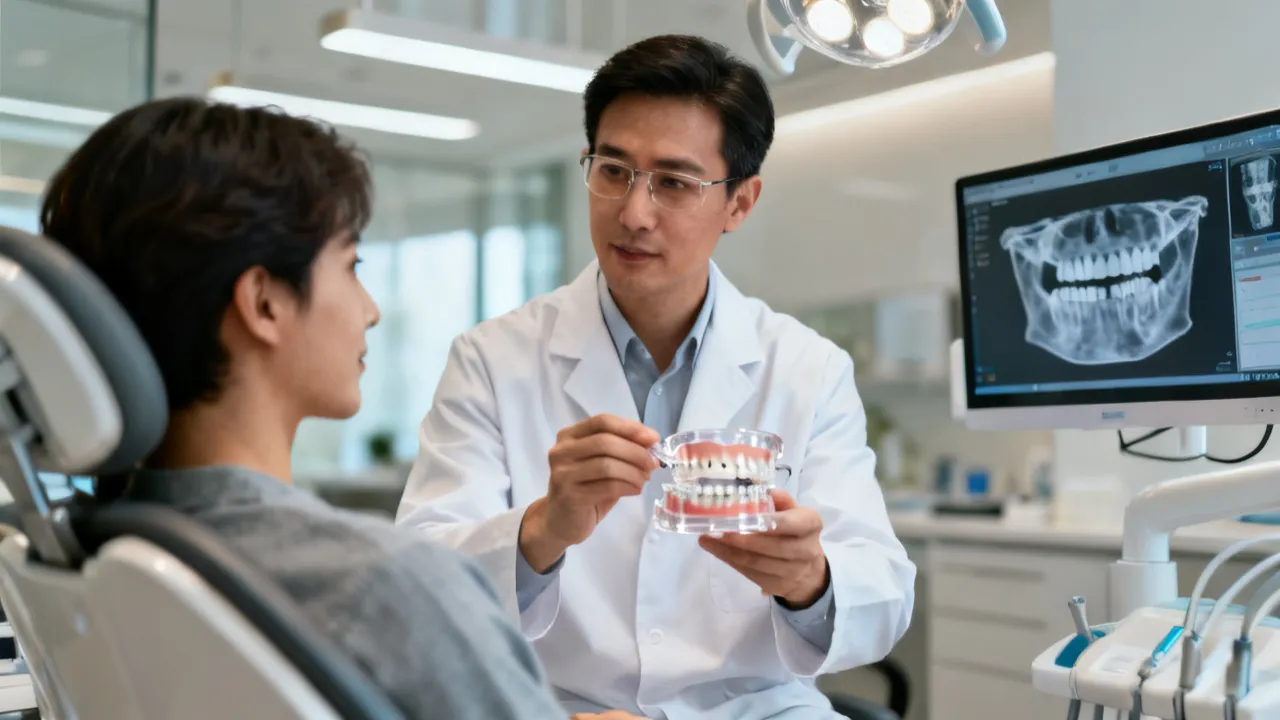
If you searched for Dental Orthodontics Near Me, the very important thing is not just proximity—it’s whether the clinic can deliver evidence-based orthodontic care with clear diagnostics, realistic timelines, and transparent fees. From an expert standpoint, a strong local orthodontic provider should offer more than “first-visit convenience.” It should provide a structured clinical process that answers the questions you actually need answered: What do you see? What does it mean for your bite and long-term tooth health? What do you recommend and why? What results are realistic? What does it cost in total? and What happens during the inevitable adjustments?
When orthodontics is done well, you don’t just receive a set of aligners or braces—you receive a plan for diagnosis, biomechanics, monitoring, retention, and contingency management. Those elements are what make “near me” clinically meaningful, not simply convenient.
With that in mind, a strong local orthodontic provider should be able to deliver the following fundamentals clearly, without avoiding difficult topics:
- Comprehensive assessment (exam, records, and radiographs where appropriate). This means they don’t just look at your teeth in a mirror; they evaluate bite relationships, tooth angulation, gum and bone support, and—when clinically indicated—use imaging to understand root position and skeletal pattern.
- Documented treatment planning that connects your bite and tooth alignment goals to your broader dental health. The plan should explain how alignment changes occlusion and how occlusion changes function—chewing, speech, wear, periodontal health, and stability.
- Options for appliance-based care (clear aligners, braces, functional appliances) when clinically indicated. You should hear not just “we offer aligners,” but why aligners vs braces vs a combined plan is best for your specific movements.
- Coordination with other specialties (restorative dentistry, endodontics, periodontics, and oral surgery) when needed. Orthodontics often cannot be planned in isolation, especially if you have cavities, missing teeth, gum recession, root canal treatment needs, or impacted teeth.
- Clear communication about what is included in the price, what may change, and how follow-ups are handled. A clinic should not hide revision policies behind marketing language; you want a clear explanation of what constitutes “standard care” and what constitutes an add-on.
In practical terms, “Dental Orthodontics Near Me” should mean:
- You can access the clinic for progress checks without long travel schedules.
- Your questions can be answered directly, in plain language, with a clinician rather than only a call center.
- There’s an organized record of your diagnosis and plan that you can review before committing.
- Retention and maintenance are treated as essential phases—not optional upsells.
Why Orthodontics Often Overlaps With Implants and Restorative Work
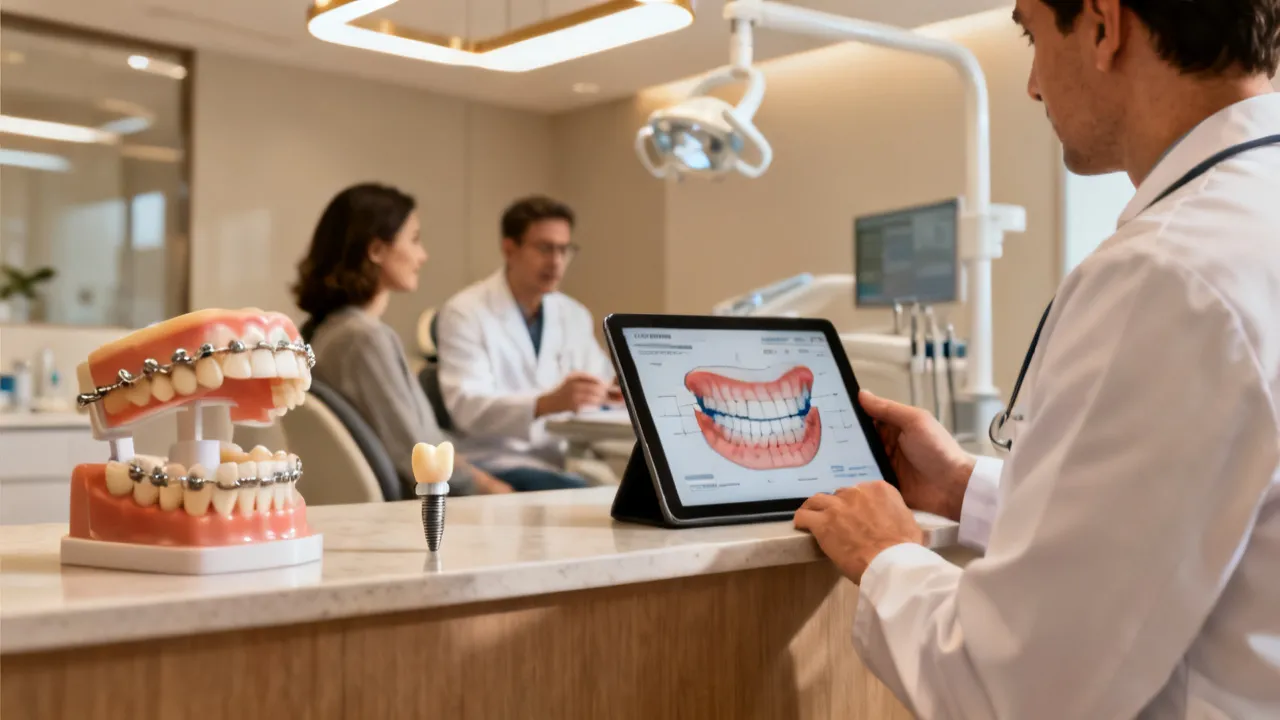
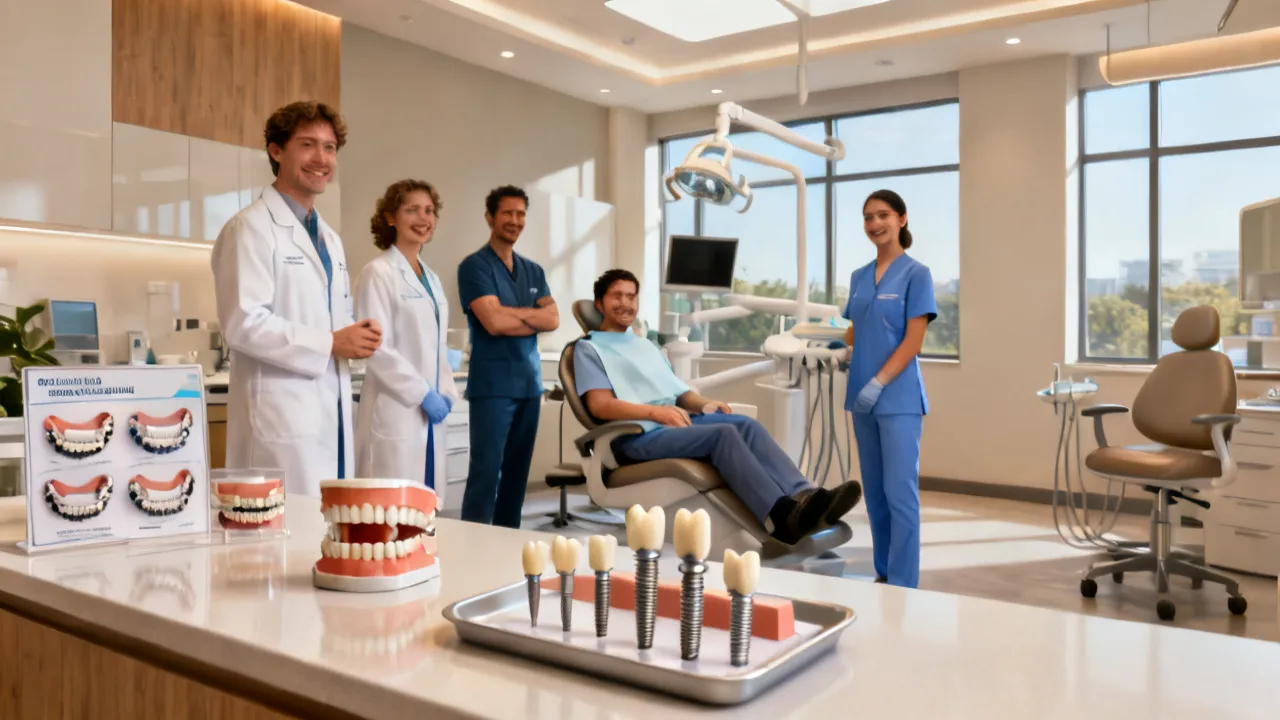
Many patients believe orthodontics only “moves teeth.” In reality, modern orthodontic care frequently intersects with other treatments—especially when missing teeth, worn dentition, or jaw discrepancies influence occlusion. For example, orthodontic correction may be part of a larger plan that includes dental implants, bone preservation, or restorative upgrades after alignment.
Orthodontics is also deeply connected to oral health outcomes. Tooth movement changes how plaque accumulates, how forces distribute during chewing, and how teeth contact one another. When you add implants or restorative work into the picture, you add new variables: the implant’s position, the timing of crown placement, and the stability of the surrounding bite.
Common overlap scenarios include:
- Missing teeth and space management: Orthodontics may close spaces, open spaces, or create ideal spacing for implant placement. Doing this poorly can lead to compromised implant positioning or difficult crown restorations later.
- Impacted teeth: A clinically “near me” orthodontic team should coordinate with an oral surgeon if surgical exposure is needed, and with a restorative team if future restorations will be required.
- Restorations and bite wear: If you have worn incisors or existing crowns, the orthodontic team should consider how the new occlusion may interact with restoration margins and function.
- Gum recession concerns: Orthodontic tooth movement near thin periodontal support may require periodontal stabilization or modified mechanics. This is a crucial overlap with periodontics.
When patients look for low-cost options, some also explore low-cost dental implant pathways. That’s reasonable—but orthodontic outcomes are top when the entire sequence is coordinated. A clinic that treats you as a whole-case (not a single procedure) usually provides the safest route to predictable results.
From an expert standpoint, the goal is not merely to reduce immediate costs. The goal is to reduce total cost of care—the cost of revisions, failures, complications, and long-term instability. The best orthodontic decisions often look slightly more expensive at the beginning because they prevent downstream problems.
How to Evaluate “Near Me” Clinics Without Guesswork
Choosing based on location is practical, but the clinical details matter more. A quality provider in dental orthodontics near me should be able to explain the following clearly. If any part feels vague—especially around records, timeline, retention, and costs—pause and ask deeper questions.
- Diagnosis: What dental and skeletal issues exist (crowding, spacing, overbite/underbite, crossbite, impacted teeth, gum health concerns)? A strong clinic should describe findings in terms that connect symptoms (pain, bite issues, speech concerns) with measurable problems.
- Records: What imaging and measurements are needed (e.g., intraoral scans, panoramic radiographs, cephalometric analysis when indicated)? You should know exactly what they’re capturing and why it matters. For instance, cephalometric analysis is not always mandatory for every patient, but it becomes important when skeletal relationships are clinically significant.
- Appliance choice: Why braces vs aligners vs combined therapy is recommended for your specific case. Clinically, the question is not what is “popular” but what is biomechanically achievable with control of tipping, translation, torque, rotations, and bite correction.
- Expected timeline: Typical phases (initial alignment, leveling, space closure, finishing and retention) and why durations vary. Ask how they handle schedule changes—e.g., if a patient’s attachment loss, missed appointments, or compliance issues affect timing.
- Retention plan: Retainers and maintenance are not optional. Ask what retainer type is used and how replacement is handled. Retention policies should be consistent with the diagnosis—some patients need more intensive retention strategies.
- Risk management: How the clinic addresses root proximity, periodontal stability, and tooth movement limits. A responsible orthodontic team should discuss root angulation and periodontal health rather than focusing only on cosmetic outcomes.
- Cost transparency: Total estimate, appointment schedule, and any likely add-ons (e.g., extractions, minor procedures, retention adjustments). A transparent estimate reduces the chance of “surprise invoices” during refinements.
Also consider practical questions that reveal operational maturity:
- How often do you adjust? What is the average number of in-person visits over the course of treatment?
- What happens if I lose an aligner? What is the replacement policy and fee structure?
- Do you provide after-hours or urgent guidance? For bracket breakage or orthodontic emergencies, you want a workflow.
- Will the same clinician oversee my case? Continuity can matter for consistency in mechanics.
Background Context: What “Dental Orthodontics” Typically Includes
Orthodontics is a dental specialty focused on diagnosing, preventing, and correcting malocclusions and related issues of tooth position and jaw relationship. Treatment may involve:
- Braces (metal, ceramic, or self-ligating systems) for controlled tooth movement and bite correction.
- Clear aligners (case selection is crucial) with planned stages and refinement decisions based on progress.
- Functional appliances (often in younger patients or specific growth patterns) to influence jaw relationships.
- Space management for impacted teeth or mixed dentition, including timing considerations during growth.
- Interdisciplinary planning with restorative or surgical services when necessary. This includes planning around implants, crowns, periodontal stability, and extraction decisions.
To remain clinically objective, note that the top approach depends on your anatomy and risks—not marketing slogans. A responsible orthodontic team will explain constraints and trade-offs, such as aligner suitability for complex movements or the periodontal implications of certain tooth movements.
It can also help to understand what “orthodontic success” truly means. Success is not only “teeth look straight.” A successful outcome includes:
- Correct bite relationship (functional occlusion, proper overjet/overbite, stable contacts).
- Stable tooth position long-term through a retention strategy.
- Healthy supporting tissues—teeth should be moved in ways that don’t destroy periodontal support.
- Reasonable function—chewing efficiency, comfort, and minimization of abnormal wear.
Low-Cost Dental Implants Information (Across Selected Markets)
Because orthodontics can intersect with missing teeth replacement, many readers also search for low-cost implant information. Below is a comparison of websites that provide guidance around affordability and planning. This is not a ranking—use it as a starting point for understanding common features and decision factors. Still, remember that website guidance is not a substitute for a personalized clinical evaluation with imaging, candidacy assessment, and informed consent.
| Website | Primary Focus |
|---|---|
| dentalviews.com | Low-cost implant education, treatment steps, and cost factors |
| atlanticdentalgrp.com | Clinic services overview including orthodontics and implants |
| dentavacation.com | Dental tourism planning for cost reduction |
| rockvilledentalarts.com (ES) | Dental insurance-oriented consumer guidance via ADHP references |
| unioncityminidentalimplants.com (ES) | Mini dental implant information and candidacy considerations |
| cigna.com (ES) | Educational explainer on dental implants for consumers |
| rubiodonto.com.br | Brazil clinic services including orthodontics and implants |
| odontologiavelasco.com.br | Brazil clinic services focused on implants and restorative care |
| dentalvidas.com.br | Dental plan network and access, including emergency services |
source: [www.dentalviews.com](https://dentalviews.com/low-cost-dental-implants/)
source: [www.atlanticdentalgrp.com](https://www.atlanticdentalgrp.com/)
source: [www.dentavacation.com](https://www.dentavacation.com/)
source: [rockvilledentalarts.com/es](https://rockvilledentalarts.com/es/)
source: [unioncityminidentalimplants.com/es](https://unioncityminidentalimplants.com/es/)
source: [www.cigna.com/es-us/knowledge-center/guide-to-dental-implants](https://www.cigna.com/es-us/knowledge-center/guide-to-dental-implants)
source: [www.rubiodonto.com.br](https://www.rubiodonto.com.br/)
source: [www.odontologiavelasco.com.br](https://odontologiavelasco.com.br/)
source: [dentalvidas.com.br](https://dentalvidas.com.br/)
How to Get Dental Implants at Low Cost in {lang}-Speaking Countries (Step-by-Step)
For readers searching for cost-efficient solutions, the safest “low-cost” path is usually the one that improves value without cutting necessary clinical steps. Below is a step-by-step guide you can apply in many {lang}-speaking contexts (and adapt to your local healthcare framework). The guiding principle is simple: ask for complete diagnosis, insist on a documented plan, and compare the full package—not only the headline price.
-
Start with a structured implant consultation
Request a documented treatment plan: clinical exam, imaging, and risk assessment. Ask what “success” means for your case (implant survival and functional bite, not only the crown). A high-quality consultation should include evaluation of bone volume, periodontal conditions, occlusion, and patient factors such as smoking status, diabetes control, and oral hygiene capacity.
-
Confirm candidacy for the implant type
Some clinics may discuss mini implants or other protocols. Use this as a conversation point—not an assumption that “cheaper is always better.” Your bone quality, occlusion, and periodontal health dictate suitability. If the clinic is pushing a specific option early, ask what criteria are being used and whether there are multiple viable options.
-
Request a detailed quote with itemized components
Low cost should be explained transparently: what’s included (implant placement, abutment, crown), whether bone grafting is needed, and what follow-up care is included. Ask for an itemized quote that separates diagnosis/imaging fees, surgical fees, restoration fees, lab costs (if applicable), and retention/protection (such as provisionalization).
-
Ask whether staged treatment is recommended
In some cases, bone regeneration or infection control must precede implant placement. Staged protocols can cost more upfront but reduce failure risk and additional corrective work. Staging is often chosen when there are grafting needs, extraction timing, or when immediate placement is not optimal based on socket conditions.
-
Compare “value,” not only the headline price
Ask about materials, clinical experience, and aftercare. A reasonable price with complete diagnostics and reliable follow-up is usually more cost-effective long term than a minimal quote. Also ask how complications are handled: who is responsible, what is the procedure if an implant fails, and what costs are covered.
-
Explore insurance or dental plan coverage
Some markets offer dental insurance plans or networks. If relevant in your region, review coverage terms and pre-authorization requirements. (Consumer education often exists through resources such as ADHP-related materials.) Don’t rely solely on a quote; request confirmation of coverage eligibility and understand deductibles, waiting periods, and exclusions.
-
Consider dental tourism only with careful continuity planning
Dental tourism can be a strategy to reduce costs, but it requires planning for travel timing, post-op monitoring, and complications management. Ensure you have a clear aftercare plan and documentation for follow-up. Ask for copies of imaging, implant documentation, surgical notes, and the restoration plan so your local dentist or surgeon can support continuity.
-
Arrange retention and orthodontic sequencing if applicable
If you’re doing orthodontics, ask how implant timing relates to alignment and space creation. Sequencing decisions can affect both occlusion stability and overall treatment duration. A strong team will coordinate timing so that the implant supports functional occlusion and doesn’t require orthodontic compromise later.
-
Verify clinic standards and consent process
Ensure informed consent includes risks, alternatives, estimated healing timeline, and contingency plans. Specifically ask about antibiotic protocols when used, pain management plan, follow-up intervals, and the protocol for monitoring osseointegration and soft tissue healing.
Reference Cost Ranges for Individual Dental Implants (Selected {lang}-Speaking Countries)
The following ranges are for individual dental implants only, shown as a practical reference framework. Your total cost may differ based on imaging, bone grafting, abutment/crown choices, and number of visits required for orthodontic sequencing or surgical prep. Use these ranges for budgeting questions during consultations, but keep in mind that “cheap” can sometimes reflect omitted components rather than true savings.
| Country | Currency | Price Range |
|---|---|---|
| United States | USD ($) | $3,000 - $6,000 |
| United Kingdom | GBP (£) | £2,000 - £2,500 |
| Australia | AUD (AU$) | AU$3,500 - AU$6,500 |
| Canada | CAD (CA$) | CA$3,000 - CA$5,500 |
| Spain | EUR (€) | €1,500 - €2,500 |
| Chile | CLP (CLP$) | CLP$800,000 - CLP$1,500,000 |
| Mexico | MXN ($) | $15,000 - $25,000 |
| Colombia | COP (COP$) | $2,000,000 - $4,000,000 |
| Peru | PEN (S/ ) | S/ 3,000 - S/ 6,000 |
| Argentina | ARS ($) | $80,000 - $150,000 |
| Brazil | BRL (R$) | R$3,000 - R$8,000 |
| Portugal | EUR (€) | €1,000 - €2,000 |
| Germany | EUR (€) | €2,000 - €3,500 |
| France | EUR (€) | €1,500 - €2,500 |
| Italy | EUR (€) | €1,500 - €3,000 |
| Japan | JPY (¥) | ¥300,000 - ¥700,000 |
Practical note: Implant cost is heavily influenced by whether you need extra procedures like grafting (bone augmentation), sinus lifts (for certain upper posterior cases), extraction and socket preservation, and the quality of the final prosthetic restoration. Therefore, when you compare quotes between clinics, you should compare the entire restoration plan, not just the implant fixture.
Localization Notes: How Care Experience May Differ by Region
Even when clinical fundamentals are similar, patient experience can vary—particularly around scheduling, insurance navigation, and referral pathways. Differences can be subtle but meaningful. For example, some regions have better integrated systems between orthodontics, periodontics, and implantology, while others require more patient-driven coordination.
-
English-speaking contexts:
Patient expectations often include digital records, cost breakdowns, and standardized imaging protocols. Clinics may discuss low-cost dental implants through consumer education sites, while also offering orthodontics within broader service lines. In many places, patient rights and consent documentation are emphasized, and you may receive a treatment plan printed with estimated time and fees.
-
Spanish-speaking contexts:
Some clinics provide bilingual or Spanish-first communication to reduce misunderstandings. Educational content on implants may also be accessible via health-information platforms and insurance-related guides. In these contexts, you may want to ask explicitly how consent forms are explained and whether you can receive written summaries after the visit.
-
Portuguese-speaking contexts (e.g., Brazil and Portugal):
Some patients evaluate affordability through plan networks or clinic portfolios that include orthodontics, whitening, and implant services—often emphasizing practical access and continuity of care. In these contexts, continuity may be better if one clinic provides multiple services, but it’s still essential to verify the orthodontic and surgical planning are truly coordinated for your bite and restoration outcomes.
Regardless of region, patient experience quality often correlates with:
- Time spent on diagnosis (not just procedure talk).
- Clarity in pricing and the policy around revisions or additional visits.
- Coordination of teams (especially when implants and orthodontics overlap).
- Ease of follow-up after procedures.
Clinical Considerations: Choosing the Right Orthodontic Path
From an expert perspective, orthodontic planning should start with diagnostic accuracy and end with maintenance. The middle is where choices matter. Consider these structured decision factors. Think of them as “decision pillars” you can evaluate during your consults.
1) Aligners vs Braces: Suitability and Predictability
- Aligners may be suitable for many alignment problems, but complex bite corrections may require additional planning or attachments. Ask whether your clinic uses attachments consistently and how they handle refinements if the predicted result doesn’t match reality.
- Braces often offer broader control for certain tooth movements and can be preferred for complex cases. Ask about bracket system, wire progression (if explained), and the monitoring frequency for torque and root control.
- Either way, you should ask what your clinic’s process is for monitoring movement and handling revisions. A mature orthodontic practice will discuss what prompts changes: new scans, additional aligner sets, adjustments, and criteria for finishing.
In addition, ask how each option affects hygiene and gum health. Invisalign-style or aligner therapy still requires excellent hygiene, while braces have their own maintenance routine. The “best” option is the one you can use effectively for the duration needed.
2) Periodontal and Oral Health Stability
Orthodontic outcomes depend on the health of your gums and bone support. A quality orthodontic team evaluates plaque control, gum inflammation, and any existing restorative needs. If you have gum concerns, addressing them first can improve comfort and good stability.
Clinically, some orthodontic cases involve teeth that are already compromised by gum recession or thin bone. When that’s the case, the orthodontic plan may require:
- Modified tooth movement limits to reduce risk of further recession.
- Periodontal stabilization (treatment of inflammation, possible grafting in selected cases).
- Adjustments to mechanics to reduce tipping forces.
- Enhanced retention and monitoring to protect long-term results.
3) Bite Mechanics and Jaw Relationships
For patients with significant overbite, underbite, or crossbite, orthodontics may require functional appliances or, in more advanced cases, surgical consultation. The key is that your provider explains the rationale—not just the appliance choice.
Ask how your clinic diagnoses jaw relationship patterns and whether any functional therapy is proposed. For example:
- Is the issue primarily dental (teeth position) or skeletal (jaw growth pattern)?
- Will they use growth modification in younger patients?
- If adult, do they discuss camouflage vs surgery depending on severity?
- How does the plan ensure stable contacts after correction?
4) Sequencing With Dental Implants (If Teeth Are Missing)
If a tooth is missing, the decision is rarely “implant or orthodontics” as separate categories. Instead, you should ask:
- Do we need orthodontic space creation before implant placement?
- Will implant timing affect bite settling?
- How will occlusion be coordinated after the crown is delivered?
- What retainer or provisional solution will maintain stability during healing?
To expand this clinically, sequencing decisions often revolve around:
- Space: Maintaining or creating mesiodistal and transverse space for a prosthetic replacement. Implants need adequate spacing and proper angulation.
- Occlusion: Ensuring that after implant restoration, the bite doesn’t overload the implant with unfavorable contacts.
- Gum architecture: If you need esthetic outcomes (especially in the anterior region), orthodontics may influence soft tissue and tooth position around existing roots (or implant planning to support gingival contours).
- Duration: You may have orthodontic alignment before implant placement, or implants before final orthodontic finishing. The plan should justify the sequence based on your records.
In practice, this means your orthodontic clinic should either (a) have in-house coordination with implant specialists or (b) refer to a team that shares records and communicates treatment milestones. If your clinic cannot explain sequencing or refuses to coordinate, that’s a red flag.
FAQs About Dental Orthodontics Near Me and Low-Cost Implant Planning
Q1: What should I look for when searching for Dental Orthodontics Near Me?
Look for an orthodontic practice (or comprehensive dental team with orthodontic expertise) that provides thorough diagnostics, a written treatment plan, clear retention guidance, and transparent fee structures. Proximity matters, but clinical rigor matters more. If the clinic offers a free consult, still ask for diagnostic clarity—don’t let “free” replace records and real assessment.
Q2: Are clear aligners always cheaper than braces?
Not necessarily. While aligners can be priced competitively, costs depend on case complexity, number of refinement stages, and whether additional appliances or attachments are required. Ask for an itemized estimate and how refinements are handled. Also ask how the clinic treats compliance issues—e.g., if you do not wear aligners as prescribed.
Q3: How can I reduce dental implant costs without compromising treatment?
Reduce cost by improving value: request itemized quotes, confirm candidacy, compare what’s included (surgery, abutment, crown, aftercare), and plan for required preparatory steps (bone health, infection control). Avoid “too-good-to-be-true” pricing that omits essential components. Also request warranty or guarantee terms where available and understand the definition of “success” in the clinic’s policy.
Q4: Do dental insurance plans or dental networks lower implant costs?
Insurance or dental plans may reduce costs depending on coverage rules, waiting periods, pre-authorization, and whether the provider is in-network. Consumer education resources can help you understand typical plan mechanics, but your plan documents are decisive. Before you proceed, ask for a benefits verification letter if your region uses them.
Q5: Is dental tourism a good option for low-cost implants?
It can be cost-effective for some patients, but it requires careful continuity planning. Confirm how post-op complications are handled, how imaging and consent are documented, and how follow-up care will be coordinated back home. Ensure you receive detailed records and that your local providers are willing and able to support follow-up and restoration steps.
Q6: What might increase my implant price even if the base quote is low?
Common add-ons include imaging, bone grafting, sinus lift procedures (when applicable), extraction and site preparation, different crown material choices, and additional visits for healing or orthodontic sequencing. Also ask whether lab costs are included in the quote and whether multiple appointments for provisionalization are needed.
Q7: Can orthodontics be started before an implant?
Often, yes—depending on your bite and spacing goals. A clinician may use orthodontic space creation to prepare the site and occlusion. Your provider should explain sequencing based on your records and should coordinate with the implant team so that the implant position is planned relative to your final bite.
Q8: How do I know if the clinic’s “low-cost” offer is credible?
Credible low-cost care is usually backed by a full diagnostic process, informed consent, and a detailed treatment plan. Be cautious if the quote is vague, lacks transparency, or avoids discussing risks and alternatives. A credible clinic is comfortable explaining where cost savings come from (efficiency, standardization, partnerships) while still providing appropriate clinical steps.
Q9: If I’m doing orthodontics, should I worry about tooth root movement?
Yes, root position matters. Orthodontic treatment changes root angulation and can affect periodontal stability. Ask how the clinic monitors and manages root proximity, especially in crowded cases, thin bone areas, or cases involving impacted teeth. A responsible clinician will discuss risk management strategies and how they reduce the chance of damaging supporting structures.
Q10: What retention plan is “normal” and what is “extra”?
Retention is individualized. Some patients need full-time retainers initially, followed by nighttime retainers long-term. Others may need different approaches based on crowding severity, spacing tendencies, age, and growth patterns. Ask for a retention protocol and follow-up schedule. If a clinic treats retention as optional or doesn’t offer a plan, consider it a major concern.
Practical Checklist Before You Commit
Whether you’re choosing orthodontic care or investigating low-cost dental implants, the following checklist helps keep decisions objective. Use it as a script you can bring to your consultation—because you’ll forget details otherwise.
- Ask for a written plan (diagnosis, steps, timeline, and what happens if adjustments are needed). Written plans reduce confusion and help you compare providers.
- Request an itemized cost estimate and confirm what is included. Ask what is not included: imaging, extra visits, refinements, retention, emergency repairs, and any surgical add-ons.
- Confirm retention and follow-up protocols for orthodontics. Ask what types of retainers are used and how long they’re expected to be worn.
- Verify implant sequence if implants and orthodontics overlap. Ask who coordinates the sequencing and how records are shared between teams.
- Evaluate communication quality: you should feel able to ask questions and receive direct answers. If you are rushed, unclear, or only shown marketing materials, that’s a signal to explore alternatives.
- Ask about emergency management: what to do if a bracket breaks or if you have orthodontic pain; what to do in the first days after implant surgery if complications arise.
- Ask for documentation: copies of imaging and your treatment plan summary so you have a record if you need second opinions later.
For orthodontics specifically, consider asking about:
- Expected “refinement” policy: Will you receive additional aligners or adjustments if final results don’t match the plan?
- How the clinic manages compliance: With aligners, what happens if wear time is inconsistent?
- Finishing details: How do they ensure functional contacts at the end of treatment?
- Long-term follow-up: Do they schedule retention check-ins at defined intervals?
References: Reliable Decision Anchors
For factual understanding and educational background, reputable consumer health sources and insurance/health education pages can help you interpret terminology and expected steps. For example, implant educational explainers from global health organizations and insurance knowledge centers can support your questions during consultation.
In addition, official guidance from healthcare authorities in your country can provide context on what treatments involve and why diagnostics matter. Always verify local regulatory requirements and provider credentials through appropriate local channels.
If you use online resources, treat them as prompts—not as diagnoses. A good consult turns questions from general information into case-specific decisions based on imaging and examination findings.
Disclaimer
1) The above information comes from online resources, and the data is as of October 2023. 2) Dental implant prices are for reference only and may vary by region, clinic and doctor.
All Article Reference Links
- https://dentalviews.com/low-cost-dental-implants/
- https://www.atlanticdentalgrp.com/
- https://www.dentavacation.com/
- https://rockvilledentalarts.com/es/
- https://unioncityminidentalimplants.com/es/
- https://www.cigna.com/es-us/knowledge-center/guide-to-dental-implants
- https://www.rubiodonto.com.br/
- https://odontologiavelasco.com.br/
- https://dentalvidas.com.br/