Government-Supported Plans: How to Get Phone Service
This guide explains how “Affordable Phones with Unlimited Everything” works through government-supported connectivity programs, and compares major Lifeline-based providers. It then outlines eligibility, step-by-step application steps, and what “unlimited” typically means in practice. Background information covers how these programs use carrier networks and eligibility verification, including income and qualifying assistance enrollment criteria.
1) Quick takeaway: what “Affordable Phones with Unlimited Everything” usually means
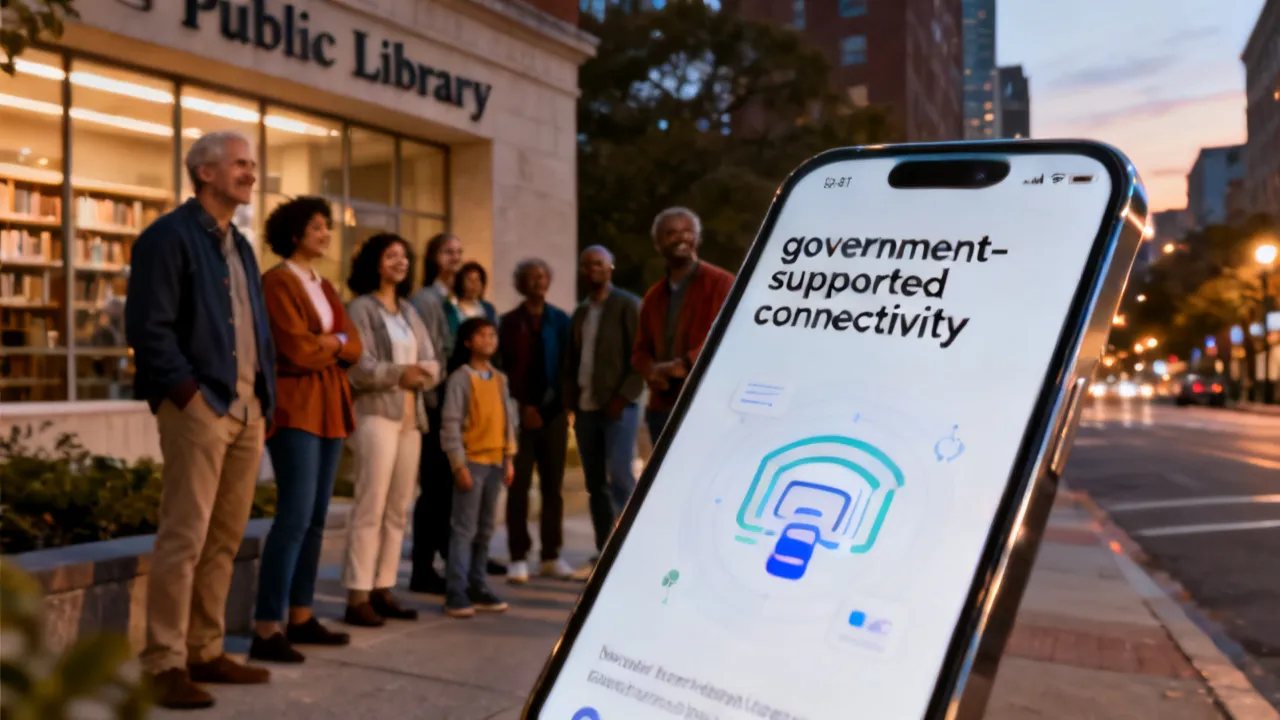
If you’re searching for Affordable Phones with Unlimited Everything, the very accurate way to approach it is as a government-supported wireless benefit routed through approved carriers. Many providers offer a handset (or allow you to bring your own device) alongside service plans that may include unlimited talk and text and data allowances—sometimes with speeds that can change after you use a certain threshold, depending on the plan and service area.
From an industry perspective, “unlimited everything” is commonly a marketing shorthand. In practice, providers typically reserve the right to apply network management, enforce fair-use rules, or adjust data speeds after higher-usage periods. That means the top plan is the one that matches your actual usage pattern (calls, texts, and mobile data), while meeting eligibility requirements reliably.
One of the biggest reasons this topic confuses people is that the word “unlimited” can apply to different parts of service in different ways. Voice calling and texting are often truly unlimited in the sense that there isn’t a hard monthly “minutes” or “texts” cap. Data, however, is where a lot of nuance hides. Some plans call data “unlimited” but still apply a defined amount of high-speed usage, then shift the connection to slower speeds. Other plans use “unlimited” in a way that means you can still use data after the high-speed portion is consumed, just not at the same performance level. So “unlimited” frequently means unlimited access, not necessarily unlimited high-speed performance.
Another point that can change the reality of your experience is network congestion. Even if your plan includes “unlimited” data, mobile networks can become busy during certain times or events, which can make speeds feel slower. That doesn’t always represent a plan limitation; it can reflect local network conditions. Therefore, when you evaluate a plan, you should try to think beyond the marketing phrase and focus on the plan’s actual “data behavior,” “network management,” and “speed management” language.
2) Comparison snapshot: major government-supported phone providers
Below is a concise comparison of five prominent providers that operate within U.S. government-supported programs. Note that plan details, device availability, and optional add-ons can vary by state, eligibility category, and timing.
| Provider (official site) | Services included in government phone plans | Potential additional costs |
|---|---|---|
| SafeLink Wireless | Government-supported access to a handset (or BYOD) plus unlimited talk and text and data (exact data characteristics can vary by plan/state) | Premium device upgrades and certain data upgrades may cost extra |
| Assurance Wireless | Affordable Android handset (often) plus unlimited talk and text and data allowances | High-speed data or international calling features may require optional upgrades |
| StandUp Wireless | Handset or BYOD options plus unlimited talk/text and data plans through qualifying assistance | Premium phone upgrades or extra data may involve fees |
| Access Wireless | Unlimited voice and text with limited high-speed data under Lifeline/ACP-style benefits | Data boosts and certain device upgrades may cost extra |
| True Wireless | Government-supported phones with voice and data plans, based on eligibility verification | Optional upgrades for better devices or additional data may incur costs |
Provider website links (source of the comparison data):
SafeLink Wireless: https://www.safelinkwireless.com
Assurance Wireless: https://www.assurancewireless.com
StandUp Wireless: https://standupwireless.com/
Access Wireless: https://www.accesswireless.com
True Wireless: https://www.gotruewireless.com/
source: [www.safelinkwireless.com](www.safelinkwireless.com), [www.assurancewireless.com](www.assurancewireless.com), [standupwireless.com](standupwireless.com), [www.accesswireless.com](accesswireless.com), [www.gotruewireless.com](www.gotruewireless.com)
Even at the “snapshot” stage, a smart buyer approach is to understand that “included in government phone plans” often includes both a benefit and a network policy. That means two people who qualify in the same state might still experience slightly different performance depending on the handset they’re using, the specific plan variant at the moment of activation, and whether the provider is applying any internal network management in response to usage patterns.
Also, the device and plan availability can be time-sensitive. At many times, providers update their handset catalogs or change plan specifics. So the table is a helpful starting point, but the real test is what the official application flow shows for your eligibility and your address at the moment you apply.
3) Why the “unlimited” part matters—what to verify before applying
When consumers read Affordable Phones with Unlimited Everything, they often focus on headline terms. A careful plan review should confirm four practical points:
- Unlimited talk and text: usually emphasized as unlimited, but still confirm whether there are any usage policies.
- Data behavior: “unlimited” data is less common than “unlimited talk/text plus limited high-speed data,” especially where network management is involved.
- Device restrictions: some programs offer specific phones, while BYOD eligibility depends on device compatibility (bands, IMEI status, and carrier acceptance).
- State-by-state differences: approved benefits can be implemented differently depending on local rules and carrier offerings.
Industry experts typically recommend checking the plan’s “terms of service” and verifying how data speeds are treated after a certain amount. If a provider advertises unlimited data in a particular plan variant, confirm the current definitions through the official application flow—because descriptions may change.
To go one step deeper, here are additional things that many applicants overlook when they focus on “unlimited everything.” These items don’t necessarily change whether the plan is eligible, but they change whether the plan is useful day-to-day.
- Hotspot behavior (tethering): Some plans restrict hotspot usage or reduce hotspot data priority. If you need to share internet with a laptop or tablet, you should explicitly look for hotspot/tethering details inside the plan terms. “Unlimited data” does not always mean hotspot is fully unlimited at full speed.
- Video streaming performance: Data policies sometimes manage video or use throttling after high usage. This can affect streaming apps, video calls, and large file downloads.
- Mobile app and background data: Apps that sync in the background (email, social media, cloud backup) can consume data faster than people expect. If you have limited high-speed data before throttling, understanding how the provider defines “high-speed” periods becomes important.
- Roaming and coverage boundaries: Some “unlimited” plans only work at full policy terms on the carrier’s primary network. Off-network roaming areas may have different performance and policy constraints.
- Fair-use and network management: Most carriers reserve the right to slow down unusually heavy users or apply management during congestion. Even if you’re a normal user, understanding that those policies exist helps set expectations and reduces the chance of confusion later.
In other words, “unlimited everything” is less about whether you can use your phone at all, and more about how consistently fast your connection stays for your preferred activities. If your main needs are calls, text, maps, and messaging apps, many plans will feel “unlimited enough.” But if you plan to stream video a lot or do large downloads regularly, you should scrutinize the data management language early.
4) Who qualifies: eligibility criteria you should be ready to document
Very government-supported phone programs (commonly discussed under Lifeline, and often paired with related assistance) center on income thresholds or participation in recognized assistance programs. Across these providers, a common eligibility frame includes:
- Income-based eligibility: income at or below a defined portion of the federal poverty guidelines (commonly cited as 135% for Lifeline and 200% for ACP).
- Program participation: enrollment in programs such as Medicaid, SNAP, SSI, or FPHA.
- Tribal lands: in many cases, residing on Tribal lands can provide additional benefits or expanded eligibility criteria.
Even if you believe you qualify, your application depends on verification. That verification is often designed to prevent mistakes and ensure that benefits go to eligible households.
Eligibility is more than “meeting a threshold.” In most cases, it also requires that your household information is correctly matched to the verification system the carrier uses. That means names, addresses, and identifiers must be entered carefully, and any uploaded document must be legible and accurate.
Applicants also sometimes underestimate how much delays can come from small mismatches. For example, if your document shows a slightly different last name spelling than your application entry, or if your address formatting differs (apartment number placement, hyphen usage, etc.), the system may treat it as a mismatch. The result can be a pause while the provider requests clarification.
Here are practical eligibility items you should be prepared for during the application process.
- Household information: the address and the individuals in the household who relate to the eligibility category.
- Identifier documents: in many cases, you’ll be asked for an ID or document that verifies identity and/or your right to participate.
- Proof of current benefit enrollment: if you qualify through a program like Medicaid or SNAP, you may need a document showing active enrollment or the relevant eligibility record.
- Income documents: if income-based, you may need pay stubs, award letters, tax forms, or other income statements depending on what your provider accepts.
- Assisted service participation documentation: if a household member participates in a recognized assistance program, you may need documentation proving participation.
Because eligibility rules can be updated and carriers may apply different verification processes, it’s best to follow the provider’s official application instructions exactly. Submitting what is requested in the format they request tends to reduce rework. If you’re unsure, it’s safer to use the provider’s official customer support or the application help prompts.
5) How to get a government-supported phone: conditions, requirements, and application steps
Applying for a government-supported phone can be straightforward, but it’s not a “one-click” process. Carriers usually require proof of eligibility and may require documentation uploads or eligibility verification workflows.
5.1 Conditions and requirements (what you typically need)
- Eligibility proof: documents or verification tied to income or qualifying assistance program enrollment.
- Identity and household information: details that match eligibility records.
- Service availability: the provider’s service area and network coverage for your location.
- Device readiness (if BYOD): your phone must be compatible and unlocked (often required), and it must pass carrier checks such as IMEI compatibility.
To reduce the chance of problems, you should treat the application like a “quality control” task: prepare your information in advance, ensure it is consistent, and be ready to answer questions quickly if the system requests additional verification.
For BYOD applicants, “device compatibility” is commonly where plans become complicated. Even if your phone is technically a smartphone and supports cellular connectivity, the carrier might require:
- Unlocked status: your device cannot be locked to another carrier.
- Valid IMEI: the IMEI must be active and not flagged for issues.
- Network band compatibility: the phone must support the frequency bands used by the carrier network.
- Supported model types: some providers accept only certain manufacturers or model ranges at the time of application.
If you want a smooth path, verify compatibility before you commit. Some carriers may let you start the application and then perform compatibility checks later. Still, you’ll save time if you can confirm your device’s compatibility as early as possible.
5.2 Step-by-step application overview (typical process across providers)
While each carrier’s interface differs, the application flow usually resembles this structure:
- Visit the official provider application page for the carrier you’re considering.
- Select how you’ll receive service:
- Receive a carrier-provided handset, or
- Bring your own device (BYOD), subject to compatibility.
- Provide eligibility details (income-based entry or program enrollment entry).
- Upload required documentation or complete verification:
- Some providers use electronic verification pathways.
- Others require document uploads for approval.
- Wait for approval and activation instructions:
- If approved, you’ll typically receive service setup information.
- If a handset is provided, shipping timelines can vary.
- Activate the line and confirm plan terms:
- Check your talk/text/data package inside your provider account.
- Verify data behavior (speed thresholds, policy language).
Applicants often move quickly through steps 2–3 and then slow down at step 4, because documentation needs can be a bit tedious. If you want fewer delays, keep a “documentation folder” ready with digital copies or scan-ready documents. Use clear images that show all corners and keep the text readable.
Also, pay attention to file types and size limits. Many websites reject certain file formats or oversized uploads. If you keep standard JPG/PNG or PDF files ready, you’re more likely to succeed on the first try.
5.3 Provider-specific application notes (how each one commonly handles it)
- SafeLink Wireless: typically supports online applications with required eligibility documentation; eligibility often hinges on income or participation in programs such as SNAP or Medicaid.
- Assurance Wireless: commonly uses online entry and may reference eligibility verification tools (e.g., national verification workflows); eligibility generally follows federal and state rules.
- StandUp Wireless: generally accepts online applications and asks for documentation uploads to confirm eligibility.
- Access Wireless: usually begins with an online form submission and then requires document upload to complete verification.
- True Wireless: commonly provides an application on its website and may support assistance via customer service for applicants during the process.
Because user experiences differ, you should consider that some carriers may require re-verification periodically. So once you have the phone and plan active, keep your eligibility documentation organized. If the provider requests updated proof in the future, being prepared can help you maintain service continuity.
6) Provider-by-provider analysis: what an informed buyer should consider
In the mobile services market, “top” often depends on the user’s daily needs. Below are expert-style considerations for choosing among government-supported carriers when your goal is the broad feature set associated with Affordable Phones with Unlimited Everything.
Instead of thinking of providers as “good” or “bad,” think of them as options with different default assumptions. One provider might prioritize certain handset models. Another might prioritize online verification convenience. Another might offer a data plan structure that is better aligned with users who browse heavily but don’t stream a lot.
Your selection should match your likely usage. For example:
- If you primarily need dependable calling and messaging plus light-to-moderate internet, many of these plans will feel similar.
- If you often watch video, livestream, or download large files, you should compare the data policy and the practical “speed after threshold” language.
- If you need to work with maps daily and use navigation for long commutes, you may value stable, consistently usable data more than raw speed on paper.
- If you need hotspot for a laptop or to connect multiple devices, you’ll want to confirm hotspot rules and whether throttling affects tethered use.
6.1 SafeLink Wireless
SafeLink Wireless is frequently chosen by households that want a consistent path to activation through online documentation. For many applicants, the primary decision points are:
- Handset selection: whether a provided phone matches your app needs (camera, battery size, storage, and OS version).
- Data plan characterization: confirm whether your data is subject to speed changes after usage.
- Upgrade pathways: some users may want to plan ahead for future premium device options.
In practice, people tend to choose a handset in two ways: either they need a specific basic capability (like WhatsApp/Signal, maps, or an acceptable camera for documentation), or they choose based on affordability of upgrades. If you rely on specific apps that require a certain Android version, that can become a hidden factor. So when evaluating SafeLink’s handset options, pay attention to the operating system version and the storage capacity. Low storage can force you to constantly clear files, which can be more painful than a slightly older handset model.
Battery life is also worth considering. Some users think the “unlimited” plan is the whole story. But if the handset’s battery is weak and you can’t easily access charging, your ability to use the “unlimited everything” features is limited by the device, not the data plan. If you plan to be away from outlets, choose the phone with the most practical battery and power efficiency for your routine.
Another practical note: after activation, it’s wise to run a quick “real world test” during the first days. Try a mapping app, check loading times for a few websites, and test any messaging or video call services you depend on. If something feels far slower than you expected, you can then evaluate whether the issue is policy-related (throttling) or network-related (coverage/congestion). That’s often more useful than waiting until the end of a month to discover the plan doesn’t fit your needs.
6.2 Assurance Wireless
Assurance Wireless is known for widely available program-supported Android handsets and a straightforward setup experience. When evaluating Assurance, focus on:
- Data allowance design: understand whether data includes high-speed allotments and whether those allotments are time- or usage-based.
- Optional feature add-ons: international calling or additional high-speed features can be optional upgrades rather than included core benefits.
Assurance can be a good fit for users who value a simple, recognizable Android experience and want a handset that supports common everyday apps. The “simple” part matters because government-supported programs often serve people who need quick activation, quick internet access, and minimal troubleshooting.
However, the “simple” setup does not automatically mean the plan’s data will feel unlimited at high speed. So it’s still essential to understand whether high-speed data is capped. If you frequently need data for work (documents, email attachments, video calls, cloud services), your data usage pattern will determine how quickly you reach any high-speed thresholds.
Also, check whether the plan includes any special rates or restrictions for:
- International calls or roaming: some plans include basic coverage but not the full suite of international calling features.
- Application-specific usage: certain plans can apply management differently to video calls or streaming services.
- Taxes or optional fees: depending on the situation and plan variant, certain add-ons can create extra charges. Even when core service is affordable, an optional upgrade might not be free.
If you want to keep costs low, avoid adding upgrades you don’t fully understand. Instead, you can often test your usage with the included plan first and add features only if you truly need them.
6.3 StandUp Wireless
StandUp Wireless commonly offers handset provisioning or BYOD options. For a buyer, the key is to align the offering to your device ownership situation:
- If you already have a phone: verify device unlock status and IMEI compatibility before relying on BYOD.
- If you need a new handset: compare current device models offered during the application period.
StandUp’s BYOD path can be helpful for people who already have a suitable smartphone and want to avoid waiting for device shipment. But the best practice is to confirm that the phone will be accepted before you assume everything will transfer seamlessly. An unlocked device that technically supports cellular may still fail IMEI compatibility checks if it has issues such as being flagged or if it doesn’t match expected model requirements.
If you’re applying for a handset instead, evaluate not only whether the phone is “new” but whether it suits your real usage needs. For instance:
- If you use online banking, you’ll likely want a stable browser experience and sufficient storage for app updates.
- If you use photo upload or document scanning for benefits/appointments, camera quality and storage can matter more than people expect.
- If you do lots of texting and occasional calls, a comfortable keyboard experience and reliable signal strength may matter more than high-end specs.
One practical consideration: if the provided handset arrives after activation or if shipping takes time, you may experience a gap. Many programs provide instructions to ensure the line becomes active. If you rely on your phone immediately, plan around shipping and activation timing. Having an alternative way to communicate during the transition period (another phone, a family member’s contact method, or an internet messaging channel) can reduce stress.
6.4 Access Wireless
Access Wireless often highlights unlimited voice and text along with limited high-speed data under Lifeline/related benefits. In practical use, that means:
- Expectations management: you may still receive meaningful browsing for many everyday tasks, but speeds can shift depending on plan design and policy.
- Data boosts and upgrades: if you require more performance during certain months, it’s worth reviewing whether data boosts are available.
Access Wireless can be particularly relevant if your needs are consistent and you prefer a plan that focuses on everyday reliability rather than high-end performance. Many people use their phones mainly for:
- Messaging apps and social communications
- Checking email and accessing websites
- Using maps and rideshare apps occasionally
- Calling for appointments, family, or work
For these tasks, a limited high-speed portion might last long enough to remain comfortable, especially if you keep video streaming in check. But if you’re a frequent streamer or you routinely download large files, a plan with reduced speed after a threshold can become frustrating. It’s not that you lose data entirely; it’s that the experience can become slow enough to feel like “data is not working.”
This is why the most important step is to test your assumptions. If you know your household’s usage includes heavy video streaming (for entertainment or long video calls), you might want to compare data policy language with plans that offer a larger high-speed portion or less aggressive throttling.
Also check whether Access Wireless offers data boosts. Data boosts can solve specific situations: a temporary increase for a work deadline, a month with increased travel, or a time when school requires video-based assignments. If data boosts are available, they can make the “unlimited” plan behave more flexibly, even if the base plan has a capped high-speed portion.
6.5 True Wireless
True Wireless supports government-qualifying applicants who want a handset plus voice and data service. Expert advice here typically includes:
- Eligibility verification readiness: keep your eligibility documentation organized to avoid delays.
- Good device satisfaction: if you need advanced features (work apps, maps, or frequent video calls), confirm the model options available.
With True Wireless, the two themes to focus on are: (1) getting through verification quickly, and (2) selecting a device that’s capable enough to avoid daily frustration. Many people focus almost entirely on the “unlimited data” marketing, but the handset experience can dominate your perception of service quality.
Device capability affects:
- App performance: older or lower-memory devices can struggle with modern app updates.
- Camera and scanning: apps that need autofocus or stable video may not work as smoothly on low-end hardware.
- Security updates: updates keep your device safer and sometimes improve compatibility with banks and government portals.
- Battery and hardware reliability: if your device overheats or drains quickly, your data experience becomes secondary.
If you plan on using your phone for essential tasks, it’s worth paying attention to the exact handset listing during your application. If possible, choose a phone that aligns with what you need rather than the cheapest or most basic option. “Affordable” can sometimes mean you can pick between multiple handset categories. Choosing the one that best matches your real requirements is usually the better value over time.
7) FAQ: common questions about government-supported phones and “unlimited” plans
Q1: Are “Affordable Phones with Unlimited Everything” plans truly unlimited?
Talk and text are commonly described as unlimited in many government-supported plans. Data is the area where definitions may vary; some plans include limited high-speed data with network management after usage, while other variants may describe different allowances. Always confirm the data terms shown during your application for the specific plan and state.
It helps to interpret “unlimited” as: you can use the service without a strict hard cap on basic usage, but you may encounter speed management. Many carriers use terms like “network management” or “fair use” to explain how data performance can change. If the plan uses a “high-speed allotment,” once that’s reached your data may slow down. Still, you often can keep accessing the internet and apps—just at a slower rate.
Q2: Can I bring my own phone (BYOD)?
Many providers allow BYOD subject to compatibility requirements such as device unlock status and network support. If you’re planning to use your existing handset, verify eligibility for BYOD through the carrier’s official application process before submitting.
BYOD can be convenient, but it isn’t always guaranteed. You may discover after verification that your device isn’t accepted. That’s why it’s smart to plan for contingencies: know whether you can switch to a carrier-provided handset if your phone doesn’t pass compatibility checks. Some carriers might provide instructions or alternative options.
Q3: What documents are usually required to apply?
Very applicants need proof tied to eligibility—either income verification or enrollment/participation in qualifying assistance programs. Exact document types can differ, but the requirement generally centers on verifying that your household meets the program criteria.
Common categories of documentation include proof of identity, proof of enrollment in qualifying programs, proof of income, and household information. If you’re applying for a program-based benefit (Medicaid, SNAP, etc.), a document showing current enrollment is often needed. For income-based eligibility, pay stubs or other income statements may be required. Always follow the provider’s accepted document list, because they may reject unofficial or unclear documents.
Q4: How do I apply—online or by phone?
Typically, carriers accept online applications. Some may provide additional assistance through customer service, but the core eligibility submission usually happens through the provider’s website and verification steps.
If you need help due to limited internet access or difficulty with document upload, some carriers may offer support through customer service. But the application step itself can still require data entry and submission. Prepare your documents and keep contact information accessible so you can resolve issues quickly if the verification system asks follow-up questions.
Q5: Do these plans include device costs or activation fees?
Government-supported plans often provide a handset at low price when you qualify; however, premium device upgrades and certain additional services may carry extra charges. Always review the carrier’s offer during checkout/activation to understand whether any optional fees apply.
Even if the core benefit covers a handset, there can be differences in how upgrades work. A “basic” phone might be included, while better models might cost additional money. Also, some plans might include fees for optional services. Review everything before confirming. If you’re not sure what an add-on is, treat it as optional and wait until you can confirm pricing.
Q6: What if my application is delayed?
Delays can occur if documentation is incomplete or if eligibility verification takes additional time. If asked to upload documents, submit clear images/scans and double-check that your provided information matches eligibility records.
To prevent delays, use legible photos, ensure all pages are included, and avoid cutting off important information. If your document has a date range, make sure it’s current and still valid for verification. If the system indicates a mismatch, fix the specific field identified rather than guessing. The fastest approvals usually happen when you address the exact issue the provider requests.
Q7: Will I definitely get a government affordable phone?
No application can guarantee approval. Approval depends on verified eligibility and program availability through the chosen provider. Always consult the official provider requirements for the very accurate and current rules.
Sometimes applicants assume approval because they meet the general eligibility idea. But eligibility verification is a rules-based system that depends on documentation and correct household details. If you don’t get approved, review the rejection reason and reapply if permitted with corrected information. Many systems allow a new attempt once issues are resolved.
8) Expert guidance: how to choose the right plan quickly
If your priority is the functionality behind Affordable Phones with Unlimited Everything, use a decision checklist:
- Match your usage: estimate monthly data needs (maps, messaging apps, streaming, work apps).
- Confirm talk/text/data wording during application to understand data speed and policy handling.
- Decide device approach: provided handset vs BYOD; if BYOD, verify unlock and compatibility.
- Review optional upgrade costs: determine whether you might need extra data or premium handset upgrades later.
- Plan for verification: keep eligibility documentation ready to reduce delays.
To apply this checklist effectively, you can also use a practical “usage category” method:
- Category A (low data): mostly calls, SMS, and occasional browsing. In this case, most unlimited-style plans will feel adequate.
- Category B (moderate data): maps, messaging, social media, and email a few hours per week. You should still verify throttling, but you may be fine with a limited high-speed portion.
- Category C (high data): regular video streaming, frequent large downloads, constant work uploads/downloads, or hotspot usage. In this case, you should compare data management language closely and consider plans with larger high-speed allocations, if available.
Another expert-level tip: if possible, ask yourself what would hurt most if the speed drops. For some people, slow data means only slight inconvenience. For others, slow data breaks critical tasks like video calls, online forms, or work documentation uploads. Identifying that “must-not-fail” activity helps you select a plan that stays responsive for what matters.
9) Final considerations: avoid common pitfalls
- Assuming “unlimited data” automatically when you see a headline phrase—always check the plan’s data policy details.
- Skipping eligibility verification steps: incomplete uploads are one of the very common causes of delay.
- Choosing a device that doesn’t fit your needs: even with surprising cost phone programs, user satisfaction depends heavily on whether the handset supports your apps and everyday tasks.
Below are additional pitfalls that often affect real outcomes, even when applicants understand the basic “unlimited” concept.
- Not checking hotspot rules: If you assume hotspot works the same as phone data, you might be surprised. Always confirm whether tethering is allowed and how it’s managed.
- Forgetting to confirm coverage: A plan can have great terms on paper, but your location might experience weaker service. If you live in a fringe coverage area, your experience will depend on local network conditions.
- Not reading activation instructions: Some programs require specific steps to activate the line. If you miss an activation step or insert the SIM incorrectly, you can create delays that look like eligibility problems.
- Waiting too long to test service: Testing during the first days helps you identify issues early—before you rely on the phone for critical tasks.
- Not keeping communications accessible: During shipping or verification, your phone service might pause. If you can, ensure you have a backup communication plan so appointments and urgent messages aren’t missed.
Ultimately, the best strategy is to be systematic: verify eligibility, apply through the official site, confirm the data and device terms during activation, and then test your connection with the apps you actually use. That process turns “unlimited everything” from a vague promise into a measurable service that fits your routine.
Disclaimer
1) The above information comes from online resources, and the data is as of October 2023.
2) This website cannot guarantee that applicants will definitely get a government affordable phone. For specific application requirements and how to obtain it, please refer to the official requirements of the provider. This website will not be updated in real time.
References / Links
- https://www.safelinkwireless.com
- https://www.assurancewireless.com
- https://standupwireless.com/
- https://www.accesswireless.com
- https://www.gotruewireless.com/